
اهل عجایب
Sarvnaz Gallery, Shiraz — 2026
درباره اجرا |
«اهل عجایب» مواجههای معاصر با تصاویر کتاب عجایبالمخلوقات است.
موجوداتی که زمانی از تخیل شکل گرفتهاند، بدون بازطراحی یا تغییر در فرم اصلیشان، از زمینهی نسخهی خطی جدا شده و در یک فضای تاریک و چندلایه دوباره ظاهر میشوند.
نقطهی شروع این پروژه برای من، پیش از آنکه روایت این موجودات باشد، فرم آنهاست؛ آزادی در ترکیب انسان و حیوان، بیاعتنایی به واقعگرایی و غرابتی که با وجود فاصلهی تاریخی، هنوز تازه و زنده به نظر میرسد.
چیزی که مرا به این تصاویر برگرداند، «عجیب بودن» آنها بهتنهایی نبود.
بیشتر، نوع آزادیای بود که در ساختنشان وجود دارد.بدنهایی که لازم نیست ممکن باشند، حیواناتی که از چند موجود ساخته شدهاند و صورتهایی که میان واقعیت و خیال معلقاند.
این تصاویر روزی از یک تخیل شکل گرفتهاند؛ و تخیل همان نقطهای است که امکان گفتوگوی من با آنها در امروز را فراهم میکند.
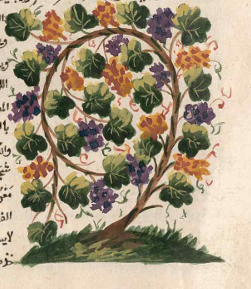

کاراکترها در این پروژه تغییر نکردهاند.
فرم، رنگ، بدن و غرابت آنها از تصویر اصلی حفظ شده است. مداخلهی من در جداسازی، زمان، حرکت، ترکیببندی، تکرار و شیوهی نمایش اتفاق میافتد.
Spatial Process
1. Reading the Site
The project began with a close reading of the courtyard: the position of the trees, visitor circulation, available darkness, surrounding lights, benches, walls, and possible projector locations. The visual composition was developed in response to these conditions, allowing the site itself to shape the work rather than forcing the projection into a predetermined rectangular frame.
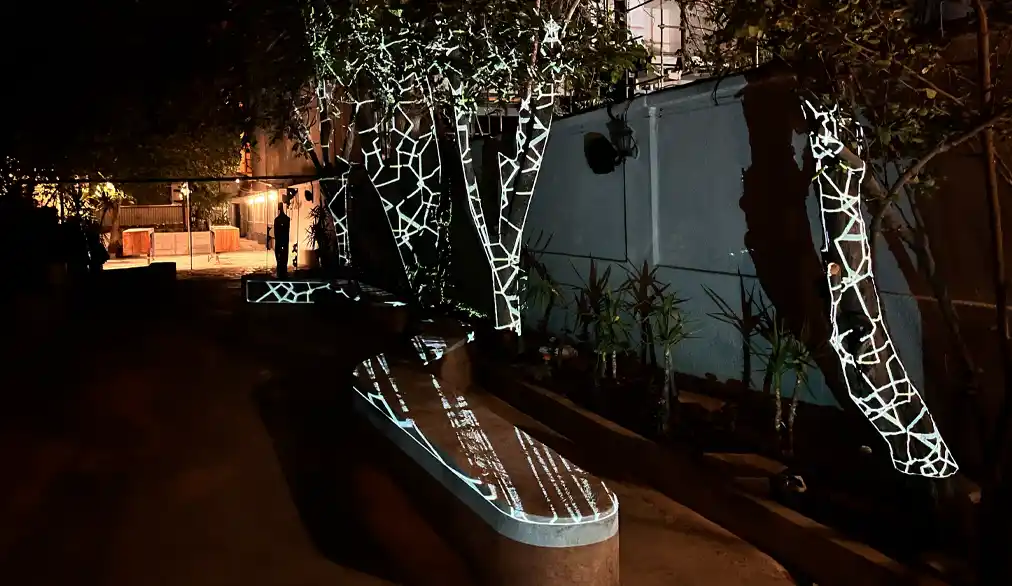
2. Mapping Natural Surfaces
The projected image was distributed across four trees and selected areas of the courtyard floor. Horizontal lines and moving patterns followed the irregular forms of trunks and branches, revealing their volume while preserving their natural texture. The image also extended across the ground and seating surfaces, creating visual continuity between separate elements of the courtyard.
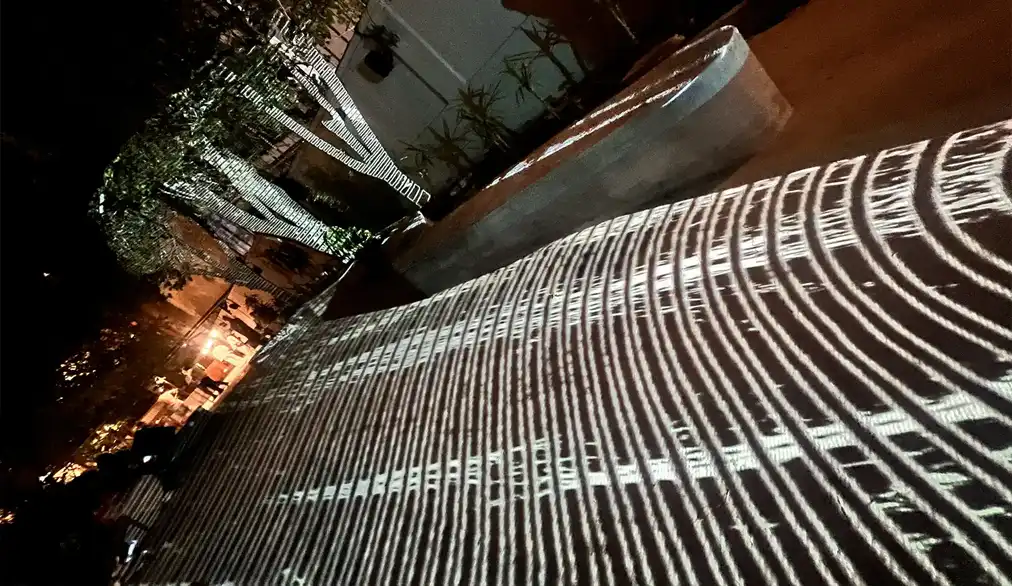
3. Audience Encounter
As visitors entered the projected field, their bodies and shadows temporarily interrupted and reshaped the composition. Walking, sitting, and gathering within the courtyard became part of the visual experience. The audience was not positioned outside the work; their movement continuously changed the way the installation was seen and understood throughout the evening.
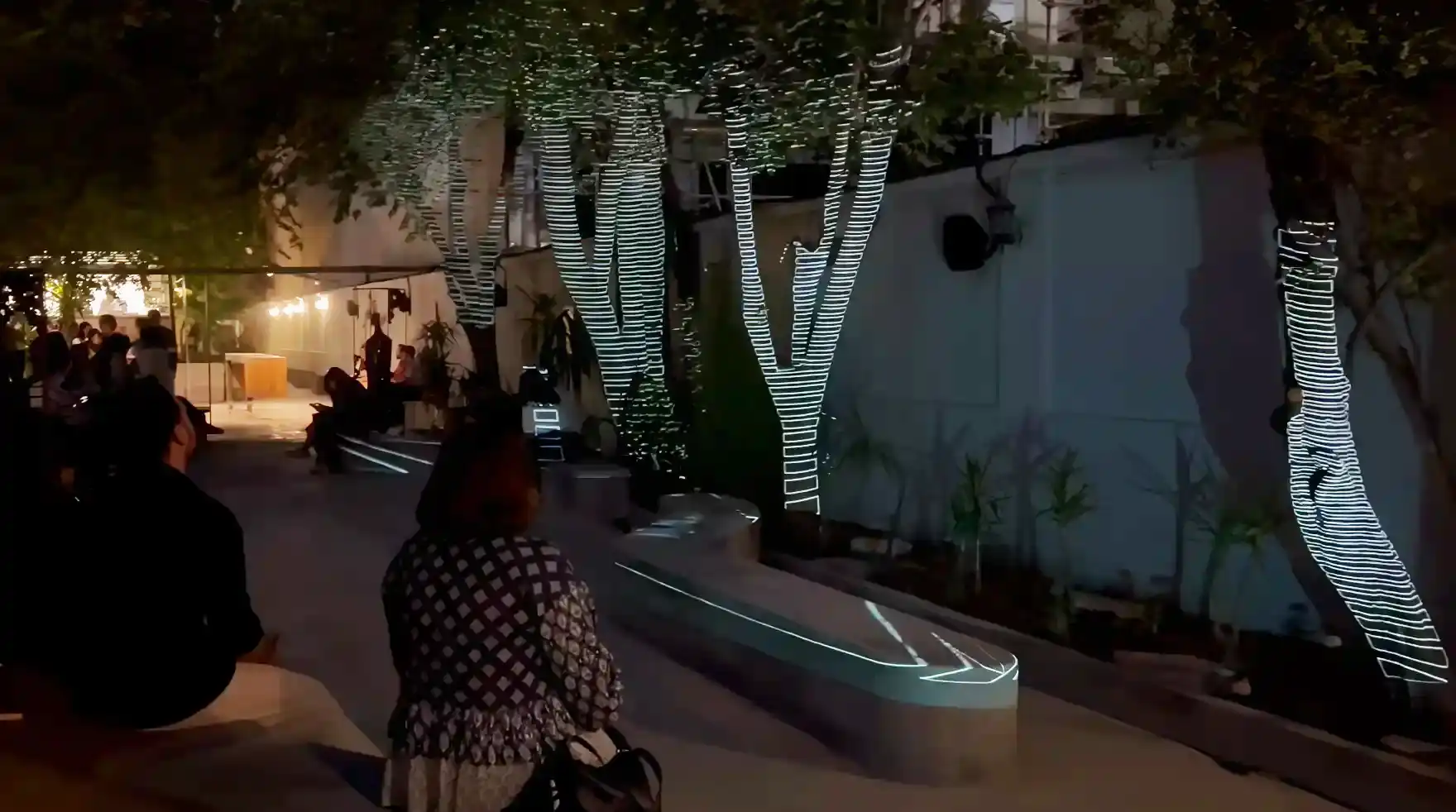
Visual Approach
The visual language was based on repetition, horizontal movement, organic distortion, and the contrast between projected light and natural surfaces.
The lines emphasized the vertical structures of the trees while also producing a sense of movement across the courtyard. White and blue-green light created a visual connection between the illuminated trees, the ground, and the surrounding darkness.
The work explored how moving images can inhabit a site without completely covering or replacing its existing material qualities.