
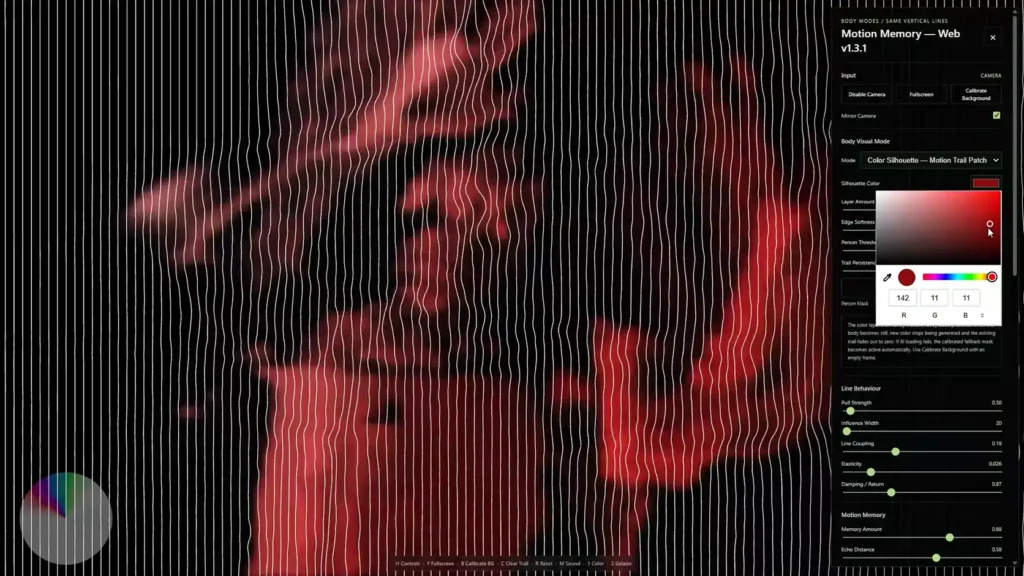
AFTERMOTION
A Web-Based Reconstruction and Extension
of a Body-Responsive Visual System
Project Description
AFTERMOTION began as an attempt to study and reconstruct an existing interactive motion-visualization model based on a field of vertical lines responding to the movement of the audience.
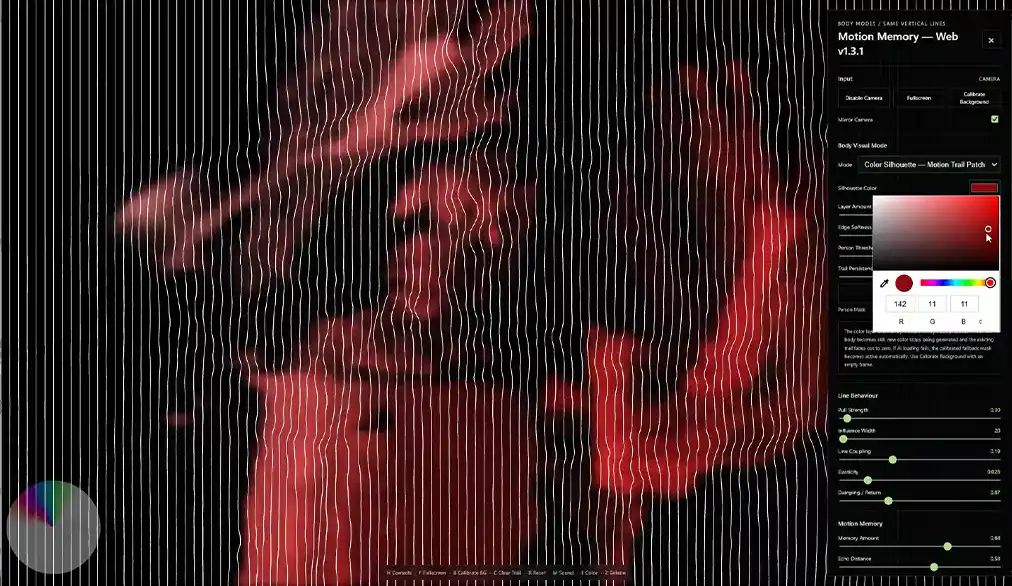
After reconstructing the core interaction, the system was developed into a configurable browser-based application designed for rapid testing, exhibition use and adaptation to different visual projects.
My contribution focused on rebuilding the interaction logic for the web, developing a practical control interface and extending the visual behavior of the system. New features include adjustable motion parameters, camera calibration, temporary color traces, motion memory, responsive sound and the gradual return of both the lines and color field to stillness.
Unlike workflows that depend on dedicated visual-programming software such as TouchDesigner, AFTERMOTION runs directly inside a web browser and can operate with a standard camera, without requiring a specialized visual system.
Project Information
PROJECT TYPE:
Interactive Web Prototype / Reconstruction Study
ROLE: System Reconstruction/ Web-Based Adaptation/Interaction and Interface Development/ Visual Behavior Extension
INPUT: Camera / Mouse
OUTPUT: Real-Time Generative Visual and Sound
TECHNOLOGY: WebGL / Canvas / Computer Vision / Web Audio
DEVELOPMENT FOCUS: Browser-Based Alternative to Dedicated Interactive Visual Software
YEAR: 2026
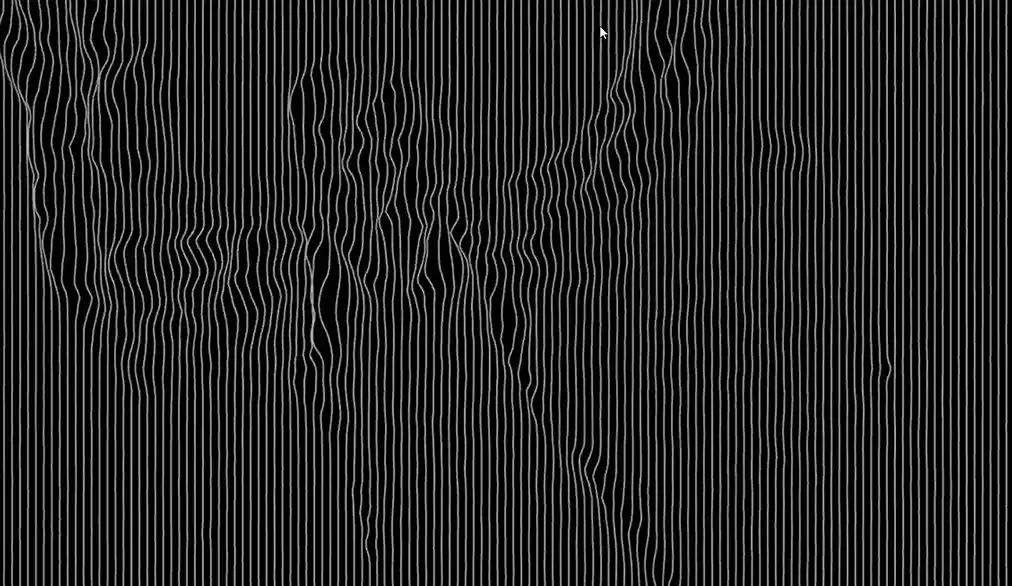
MY CONTRIBUTION
Reconstructed the interactive line system for browser-based use
— Developed a configurable controller for rapid visual adjustment
— Added camera and mouse interaction modes
— Introduced motion-based color traces and automatic visual decay
— Developed calibration, sensitivity and motion-memory controls
— Added responsive sound behavior
— Reduced dependency on specialized software and hardware
— Prepared the system for exhibition testing and online presentation
Spatial Process
1. Reference Analysis
An existing interactive motion model was studied to understand its visual behavior, spatial response and interaction logic.
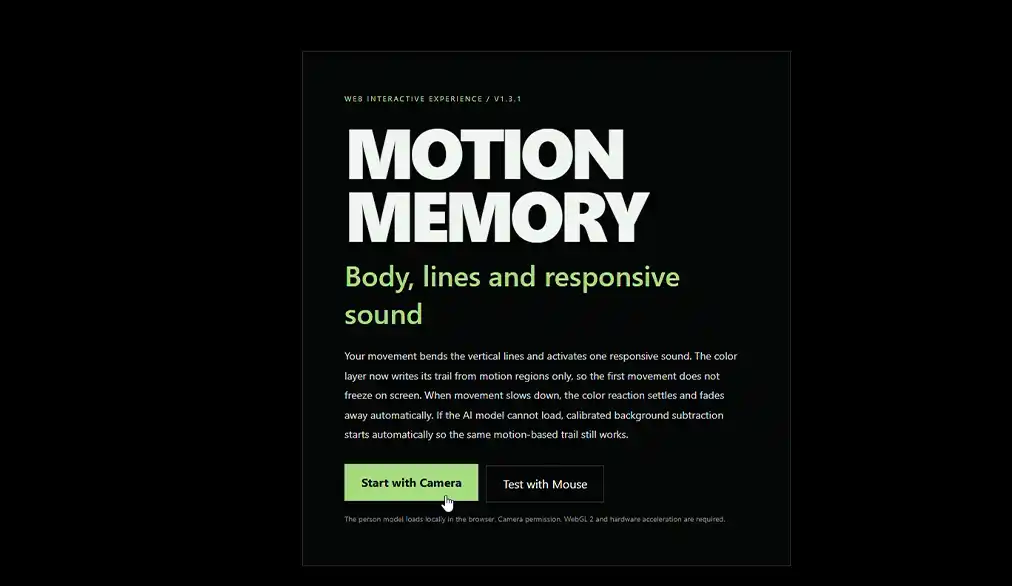
2. Web Reconstruction
The core interaction was reconstructed as a browser-based system using camera input, WebGL and real-time motion analysis.
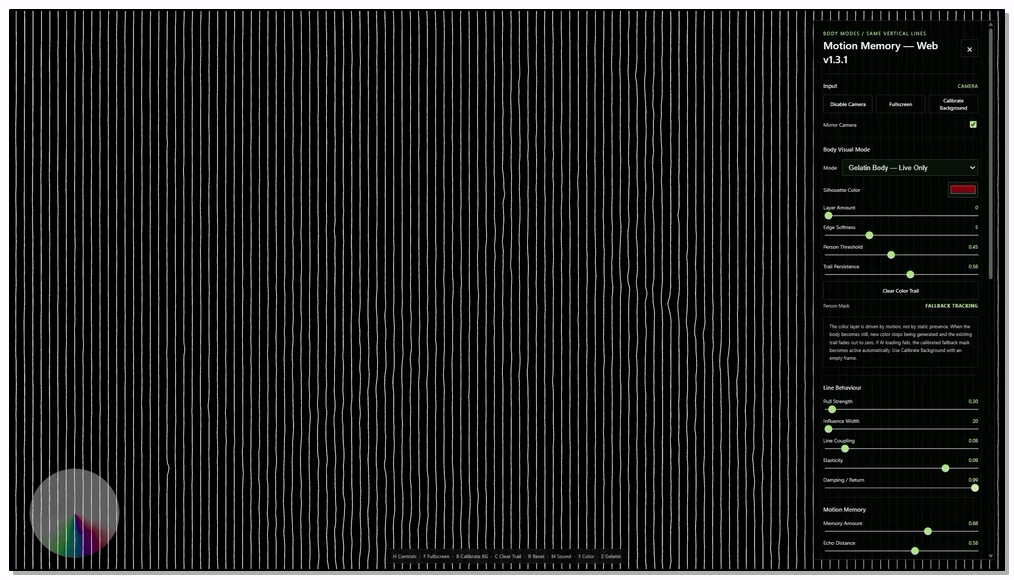
3. Functional Extension
The reconstructed system was expanded with a control interface, adjustable parameters, color traces, calibration tools, responsive sound and exhibition-oriented behaviors.
Reference
AFTERMOTION is an independent web-based reconstruction and functional extension inspired by an existing interactive motion-visualization model.
The original visual concept is not presented as my own. The project documented here focuses on technical reconstruction, web adaptation, interface development and the addition of new interaction behaviors.
A browser-based reconstruction and development study.
Camera access is required.
For the best experience, use Chrome or Edge on a desktop computer.