
Site-Specific Projection Installation
Sarvnaz Gallery, Shiraz — 2026
Project Description
Among the Trees is a site-specific projection installation developed across four trees and the courtyard floor of Sarvnaz Gallery in Shiraz. Moving lines extended between the natural surfaces of the trees, the ground, and the surrounding architecture, transforming the courtyard into a temporary visual environment.
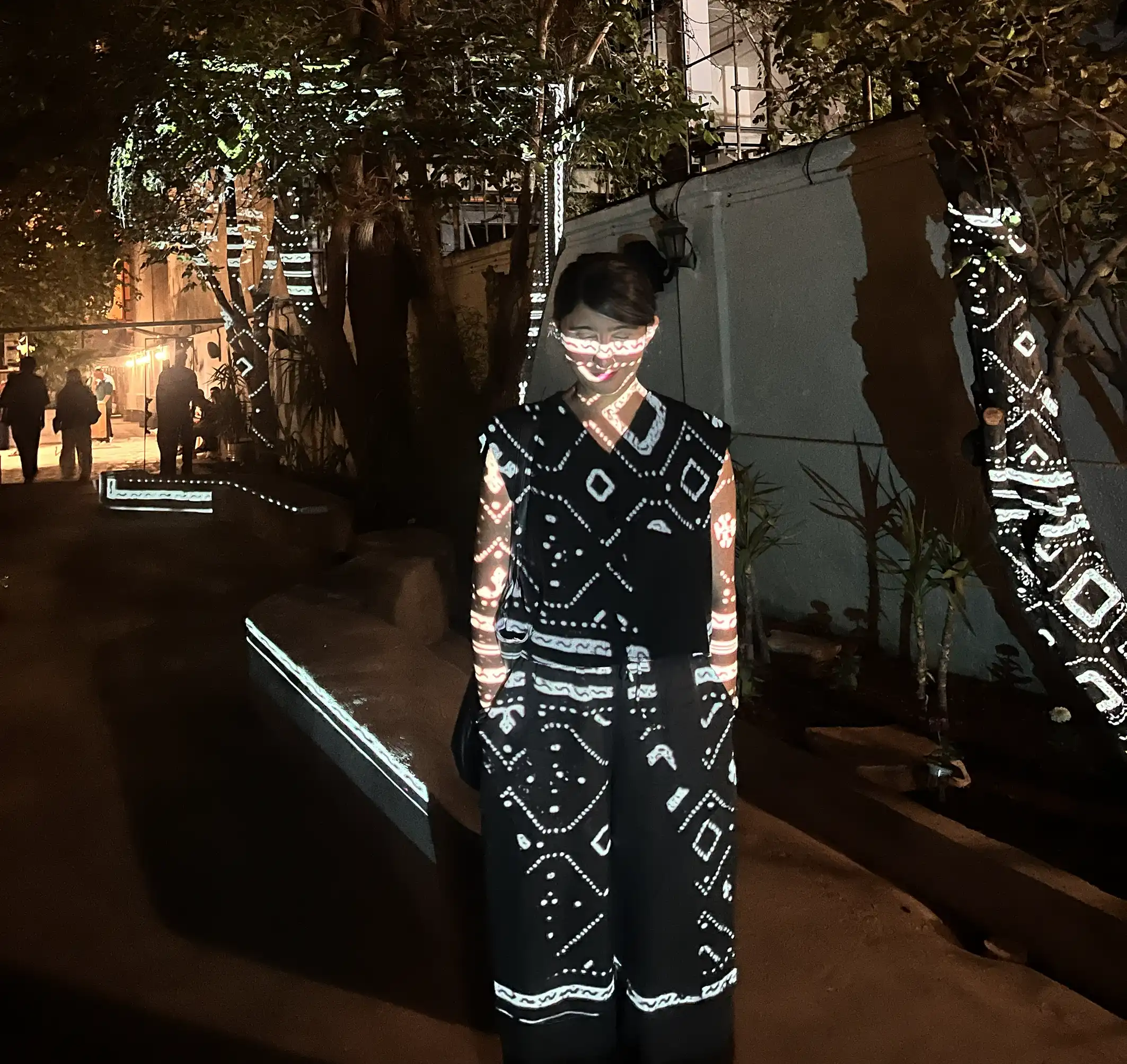
As visitors moved through the projected area, their bodies and shadows briefly entered the composition. The installation was experienced not from a fixed viewpoint, but through walking, gathering, and remaining within the space.
Project Information
PROJECT TYPE: Site-Specific Projection Installation
MEDIUM: Moving Image, Projection Mapping, Light
LOCATION: Sarvnaz Gallery, Shiraz, Iran
PROJECTION SURFACES: Four Trees, Courtyard Floor, and Seating Surfaces
YEAR: 2026
VISUAL CONCEPT AND DIRECTION: Shahrouz Karimi
PRODUCTION: Azmano
PROJECT ADVISOR: Ghazal Mansouri
PROJECT ASSISTANT: Parisa Esfandiari
Exhibition Context
The installation was created for the courtyard of Sarvnaz Gallery during the opening of the exhibition From Tomorrow, No One Saw the Old Man Again.
The courtyard functioned as both an entrance to the exhibition and a social space where visitors gathered before and after entering the gallery. The projection transformed this transitional area into part of the exhibition experience.
Instead of separating the moving image from its surroundings, the installation allowed light, vegetation, architecture, visitors, and ambient darkness to become part of a shared visual field.
Spatial Process
1. Reading the Site
The project began with a close reading of the courtyard: the position of the trees, visitor circulation, available darkness, surrounding lights, benches, walls, and possible projector locations. The visual composition was developed in response to these conditions, allowing the site itself to shape the work rather than forcing the projection into a predetermined rectangular frame.
2. Mapping Natural Surfaces
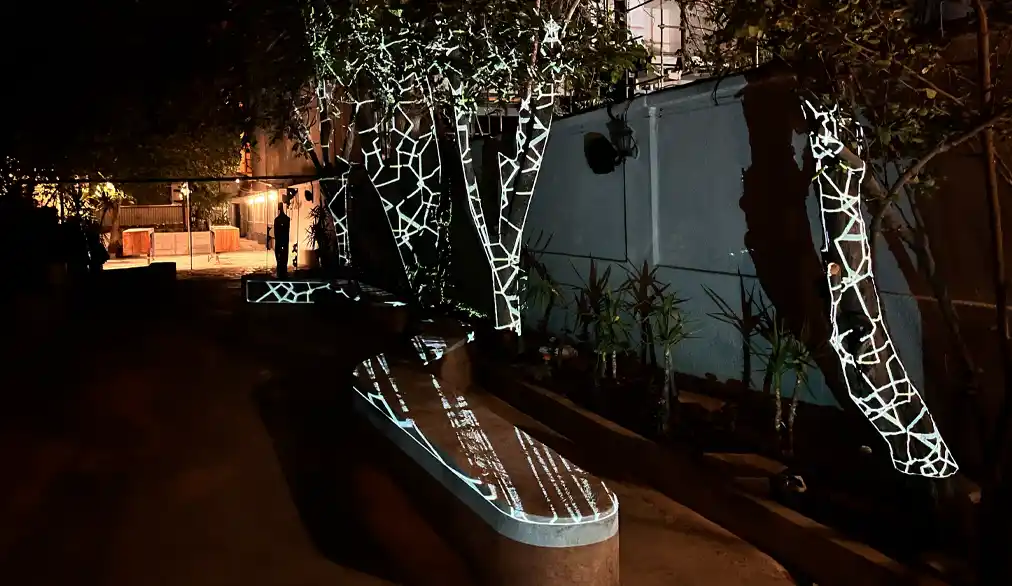
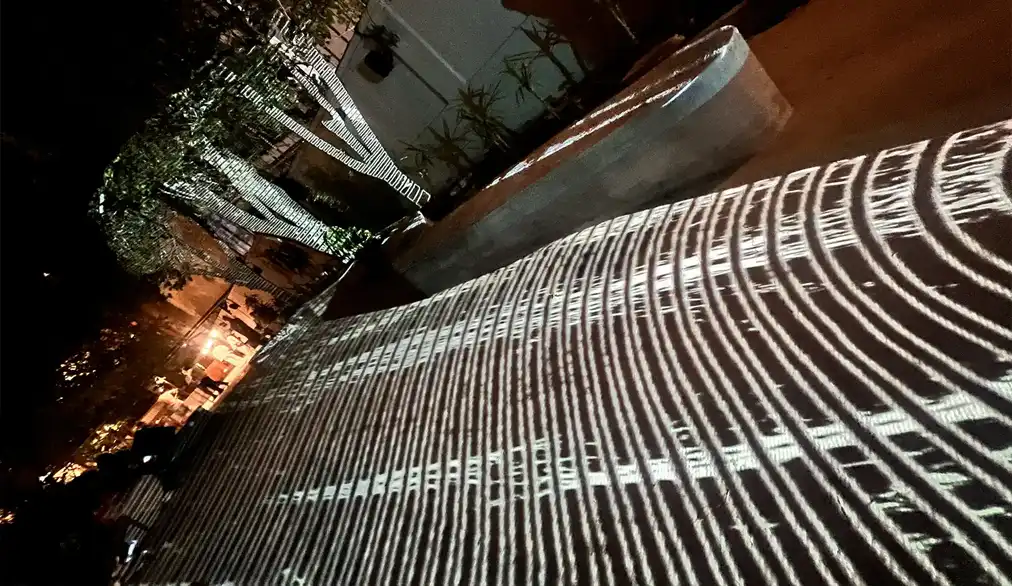
The projected image was distributed across four trees and selected areas of the courtyard floor. Horizontal lines and moving patterns followed the irregular forms of trunks and branches, revealing their volume while preserving their natural texture. The image also extended across the ground and seating surfaces, creating visual continuity between separate elements of the courtyard.
3. Audience Encounter
As visitors entered the projected field, their bodies and shadows temporarily interrupted and reshaped the composition. Walking, sitting, and gathering within the courtyard became part of the visual experience. The audience was not positioned outside the work; their movement continuously changed the way the installation was seen and understood throughout the evening.
Visual Approach
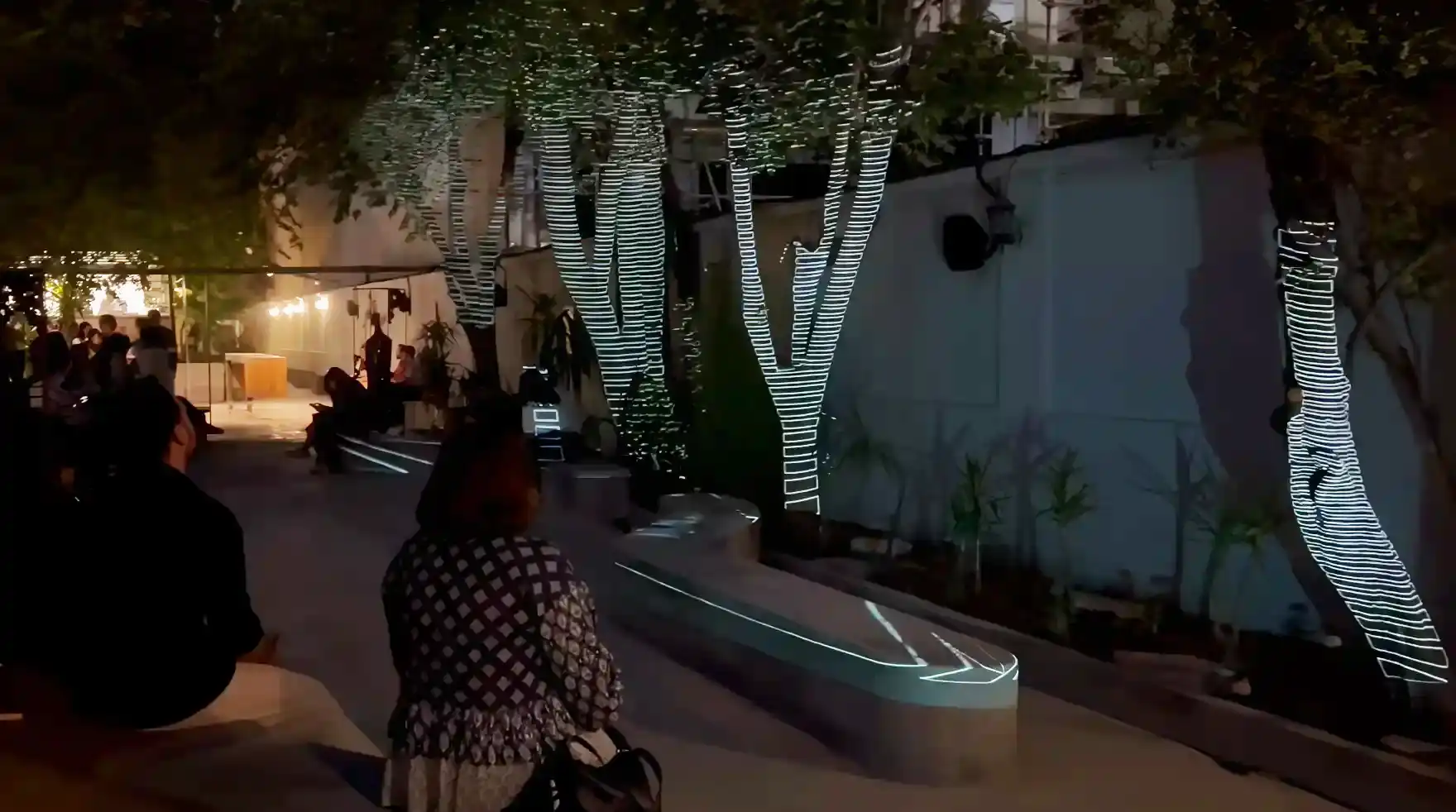
The visual language was based on repetition, horizontal movement, organic distortion, and the contrast between projected light and natural surfaces.
The lines emphasized the vertical structures of the trees while also producing a sense of movement across the courtyard. White and blue-green light created a visual connection between the illuminated trees, the ground, and the surrounding darkness.
The work explored how moving images can inhabit a site without completely covering or replacing its existing material qualities.